Managing AI well takes more than an approved software list. It takes a clear role, an accountable owner and a way to judge whether the work is any good.
Most investment firms have a familiar process for buying software. IT reviews security, procurement handles the contract, someone approves the purchase and the tool goes on a list.
That process is a useful starting point for AI. The difficulty comes afterward, when the work begins to change.
A tool might start by summarizing meetings. A few months later, it is drafting investment memos, searching internal documents and helping prepare investor communications. The vendor adds capabilities. Employees find new uses. Information starts flowing through it that nobody considered during the original review.
The firm approved a product, but it now needs to manage the work that product does. That requires knowing its responsibilities, what information it can access, who oversees it and whether it is performing well.
These are familiar management questions. We ask them about people every day. Applying the same discipline to AI would help firms get more value from their tools while keeping better control of how they are used.
Beyond the approved list
In our October survey of alternative investment managers, 92% said their people used five or fewer AI tools. Ninety percent described their AI policy as basic or nonexistent, and 64% said the CCO was responsible for checking it.*
Even the tool count depends on what the firm includes. One firm we worked with expected to find eight or nine AI tools. Its CRM vendor had also switched on an AI note-taker for every user, without anyone at the firm approving it. The firm had gained another AI capability without making another purchase.
Finding that capability is the first step. Understanding its use takes more work. Which meetings does it record? What information does it retain? Where do the summaries go? Who checks them before they become part of the firm’s records?
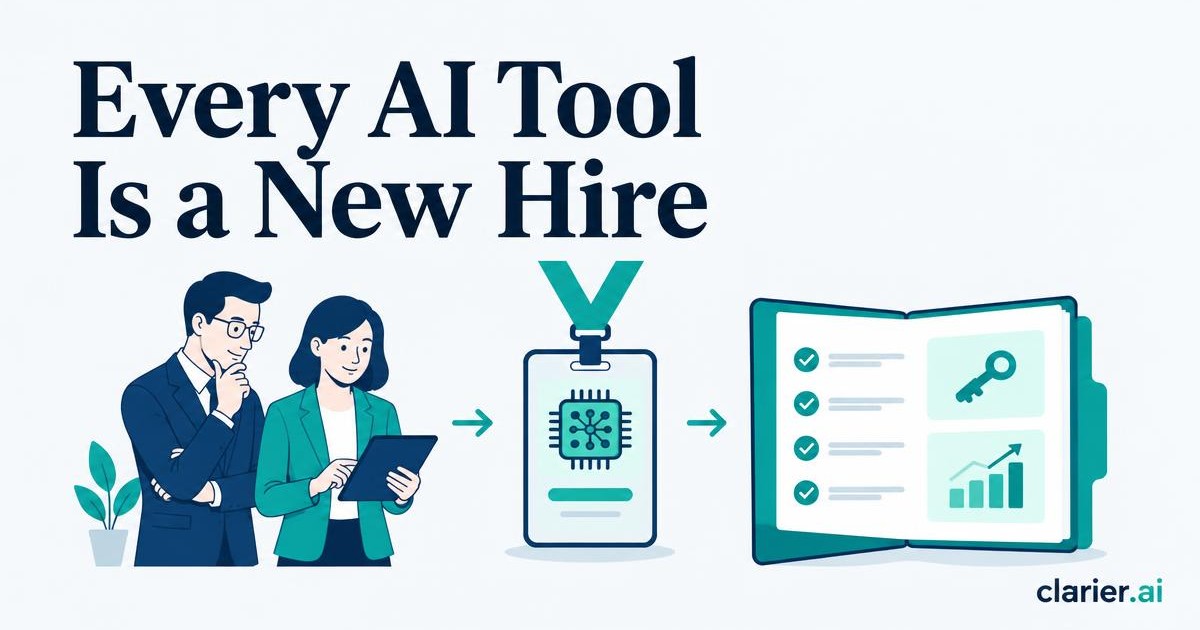
A procurement record will rarely answer those questions. Someone needs to understand the work, establish boundaries and remain responsible as its use develops. In practice, that looks a lot like managing a new hire.
When someone joins your firm, you define their role, assign a manager and give them access to the information they need. As they take on more responsibility, you adjust their access and supervision. You also review whether their work meets expectations.
An AI tool needs much of the same attention.
| How you manage a person | The equivalent for an AI tool |
|---|---|
| Check their background | Review the vendor, including data retention, model training and sub-processors |
| Define their role | Record the approved uses and who may use it |
| Grant appropriate access | Specify which information it may handle |
| Assign a manager | Name a business owner responsible for its use |
| Review their performance | Assess adoption, quality, cost and suitability as the tool changes |
| Manage their departure | Remove access, address retained data and preserve the firm’s work |
The comparison has limits. An AI tool cannot take responsibility for its output. That stays with the firm and the people using it, which makes clear ownership especially important.
Compliance sets requirements. IT manages technical controls and access. The business owner understands the work and answers for how the tool is used. Together, they can make a more useful decision than simply approving a product: they can approve a particular use, by particular people, with appropriate information and controls.
Managing for value
Defining the work this clearly also makes it easier to get started. Employees know what they can request, and reviewers have a basis for deciding. A use that fits established criteria can move quickly. A request involving more sensitive information or greater responsibility gets closer attention.
Without that clarity, every request can become a fresh discussion about the same risks. Approvals sit in inboxes, employees lose patience and some start using tools without asking. The firm ends up with both slower adoption and less visibility.
A clear approval process helps people begin. Ongoing management helps determine whether the investment is paying off.
One private equity firm we onboarded was spending about $6,000 a month on a single AI tool without a clear view of who used it or what they used it for. The bill showed the cost, but gave the firm little basis for judging the value.
That judgment requires understanding what happens after licenses are assigned. Low usage could mean the firm bought too many seats. It could also mean employees need training, or that the tool does not suit the work. High usage is encouraging, but it still leaves the question of whether the output is useful and reliable.
Looking at adoption alongside the work being produced gives the firm a better basis for action. It can expand access where a tool is helping, support teams that are struggling and retire products that no longer earn their place.
This is another reason the human capital comparison is useful. Hiring is only the beginning of an investment in someone’s contribution. Firms spend time helping people become effective, reviewing their work and deciding where their abilities are best used. AI deserves a similar level of management attention.
Keep the role under review
That attention matters because neither the tool nor its role stands still.
A vendor may introduce a new model, add a connector or change its terms. Meanwhile, a team may move from summarizing public research to analyzing confidential deal material. The product name on the approved list stays the same, even though the basis for approval may have changed.
A quarterly review can help assess adoption, cost and results. Changes to capabilities, terms or the information being used may need attention sooner. Both matter: the firm needs to know whether a tool is still appropriate and whether it is doing useful work.
You can begin by answering four questions for each AI tool in use:
- What is its job? Record the work it is approved to do and who may use it. Include AI features embedded in software the firm already owns.
- What can it access? Be specific about permitted information, connected systems and restrictions.
- Who is responsible? Name a business owner who understands the use and can answer for it, with support from compliance and IT.
- How will you know it is working? Review usage, cost and the quality of the work, and establish which changes should trigger another review.
Those answers give you the beginnings of a management process. Keeping them current is what makes the process useful.
Thinking about AI this way changes what you ask of it. You want to know whether each tool is doing useful work, whether it has appropriate access and who is responsible when its role changes. Approval is the beginning of that relationship.
Clarier helps investment firms manage that ongoing responsibility by discovering AI in use, monitoring vendors continuously and keeping a record of what each tool is approved to do and who owns it.
To see where your firm stands, take the AI governance maturity assessment.
*Source: Clarier’s October 2026 survey of 39 alternative investment managers.